nitrogen?
any1 running nitrogen in their tires?
just put some on another car and paid for the nitrogen, any1 know if it really works?
i seem to not hold air that good on my stretch, would nitrogen help?
View original BBCode
any1 running nitrogen in their tires?
just put some on another car and paid for the nitrogen, any1 know if it really works?
i seem to not hold air that good on my stretch, would nitrogen help?
well i used to work on jets and thats all we used in the struts and tires. psi changed with temperature but not significantly like air would. as far as automotive use........ never tried it myself:shrug:
View original BBCode
well i used to work on jets and thats all we used in the struts and tires. psi changed with temperature but not significantly like air would. as far as automotive use........ never tried it myself:shrug:
I used to do this to cars when I worked at a dealership. Really saw no benefits to it unless you put it in a race car.
View original BBCode
I used to do this to cars when I worked at a dealership. Really saw no benefits to it unless you put it in a race car.
a tire guy said the molecule are bigger and less likely to find their way out of the tire.  it was $2 per tire so i said oh yeah do it then.

just wondering if anybody with experience would say it was beneficial with a stretched tire.   oh well ill just do it and see.  only $8 but i gotta find time to get there
View original BBCode
a tire guy said the molecule are bigger and less likely to find their way out of the tire. it was $2 per tire so i said oh yeah do it then.
just wondering if anybody with experience would say it was beneficial with a stretched tire. oh well ill just do it and see. only $8 but i gotta find time to get there
lolollol

man i need to sell soem stuff to you, i have a jeep payment to make. imsure you can help me out with that


nitrogen is lighter than normal air (IIRC) so it reduces weight in teh tire. BMW use it in all of their stuff from teh dealer.


but no, it will not affect your strech, or if it will hold air
View original BBCode
lolollol
man i need to sell soem stuff to you, i have a jeep payment to make. imsure you can help me out with that
nitrogen is lighter than normal air (IIRC) so it reduces weight in teh tire. BMW use it in all of their stuff from teh dealer.
but no, it will not affect your strech, or if it will hold air
One of the main reasons why most tire dealers are using Nitrogen in their tires is so they dont lose air over time. Tires tend to lose 2-3 psi per month. Another great reason to use nitrogen is so that the tires run cooler. When the tires run cooler they will last longer. Regular air temp in the tire can fluctuate. Nitrogen in the tire stays constant. If your tire is not holding air then filling it with nitrogen will not help.
View original BBCode
One of the main reasons why most tire dealers are using Nitrogen in their tires is so they dont lose air over time. Tires tend to lose 2-3 psi per month. Another great reason to use nitrogen is so that the tires run cooler. When the tires run cooler they will last longer. Regular air temp in the tire can fluctuate. Nitrogen in the tire stays constant. If your tire is not holding air then filling it with nitrogen will not help.
so nitrogen will help. they hold air, but i chack then every month, and i usually have to add a little to some. i would like for them to stay constant a little longer. from your explanation it will help.
View original BBCode
so nitrogen will help. they hold air, but i chack then every month, and i usually have to add a little to some. i would like for them to stay constant a little longer. from your explanation it will help.
I chuckle a lil' bit everytime this comes up.

Plain ol' air is 70% nitrogen, 21% oxygen, and the rest is random stuff.

1 other thing about nitrogen too is that if there's not oxygen in the mix, there's no opportunity for corrosion. Not really important though, because the outside of the wheel will have corrosion on it long before the barrel anyways :shrug:
View original BBCode
I chuckle a lil' bit everytime this comes up.
Plain ol' air is 70% nitrogen, 21% oxygen, and the rest is random stuff.
1 other thing about nitrogen too is that if there's not oxygen in the mix, there's no opportunity for corrosion. Not really important though, because the outside of the wheel will have corrosion on it long before the barrel anyways :shrug:
NORMAN stop tryna be baller and jus use regular air! :slap:
View original BBCode
NORMAN stop tryna be baller and jus use regular air! :slap:
ok ok fine i wont pay for it. but if i can get a guy to do it free im doing it.
View original BBCode
ok ok fine i wont pay for it. but if i can get a guy to do it free im doing it.
yes. regular air has nitrogen percentage in it already. our atmosphere is made up of air. so when a tire is mounted. it is filled with atmosphere already, just at neutral pressure.
pump it full of 100% percent nitrogen... and you will have probably a 70-30 split. nitrogen to air. or so.... maybe less.

i see this as unnecessary as SIPING TIRES. bam another 2-5$.
2 here 5 there. new valve stems too? chrome caps?

nitrogen in street tires not needed. and useless. unless you are running dual valve stem rims. which they do make. which are made for nitrogen and such.
View original BBCode
yes. regular air has nitrogen percentage in it already. our atmosphere is made up of air. so when a tire is mounted. it is filled with atmosphere already, just at neutral pressure.
pump it full of 100% percent nitrogen... and you will have probably a 70-30 split. nitrogen to air. or so.... maybe less.
i see this as unnecessary as SIPING TIRES. bam another 2-5$.
2 here 5 there. new valve stems too? chrome caps?
nitrogen in street tires not needed. and useless. unless you are running dual valve stem rims. which they do make. which are made for nitrogen and such.
fourcsan;211979 wrote:yes. regular air has nitrogen percentage in it already. our atmosphere is made up of air. so when a tire is mounted. it is filled with atmosphere already, just at neutral pressure.
pump it full of 100% percent nitrogen... and you will have probably a 70-30 split. nitrogen to air. or so.... maybe less.
i see this as unnecessary as SIPING TIRES. bam another 2-5$.
2 here 5 there. new valve stems too? chrome caps?
nitrogen in street tires not needed. and useless. unless you are running dual valve stem rims. which they do make. which are made for nitrogen and such.
The nitrogen that they pump in tires is 100% compressed nitrogen. Thats the good stuff worth paying for. You'll usually get a green valve cap if they pump it.
View original BBCode
[quote=fourcsan;211979]yes. regular air has nitrogen percentage in it already. our atmosphere is made up of air. so when a tire is mounted. it is filled with atmosphere already, just at neutral pressure.
pump it full of 100% percent nitrogen... and you will have probably a 70-30 split. nitrogen to air. or so.... maybe less.

i see this as unnecessary as SIPING TIRES. bam another 2-5$.
2 here 5 there. new valve stems too? chrome caps?

nitrogen in street tires not needed. and useless. unless you are running dual valve stem rims. which they do make. which are made for nitrogen and such.[/quote]
The nitrogen that they pump in tires is 100% compressed nitrogen. Thats the good stuff worth paying for. You'll usually get a green valve cap if they pump it.
this is true. but they do not take out the old air inside it. which is nitrogen mixed with oxygen. gains are fairly insignificant.  the atmosphere is 78% nitrogen already. to pump in 100%  compressed nitrogen into tires already filled with 78% nitrogen. what are you getting? 90% nitrogen?
78% to 90%. horray.

wait. GREEN VALVE CAP? where!

if you dont have dual valve stems.
you dont need nitrogen tires.
if you have dual valve stems.
chances are you are not @ les shwabb

i do not hear of slow leaks due to stretch.
like difference in molecule size to leaking...
to answer the OPs question, in my own opinion anyways.
View original BBCode
this is true. but they do not take out the old air inside it. which is nitrogen mixed with oxygen. gains are fairly insignificant. the atmosphere is 78% nitrogen already. to pump in 100% compressed nitrogen into tires already filled with 78% nitrogen. what are you getting? 90% nitrogen?
78% to 90%. horray.
wait. GREEN VALVE CAP? where!
if you dont have dual valve stems.
you dont need nitrogen tires.
if you have dual valve stems.
chances are you are not @ les shwabb
i do not hear of slow leaks due to stretch.
like difference in molecule size to leaking...
to answer the OPs question, in my own opinion anyways.
When filling up tires, I believe they have to deflate the tires and fill them with Nitrogen until they are above 97.6% or something close. I think thats the number when I used to do it at the dealership.

It really is useless unless you have a racing application.
View original BBCode
When filling up tires, I believe they have to deflate the tires and fill them with Nitrogen until they are above 97.6% or something close. I think thats the number when I used to do it at the dealership.
It really is useless unless you have a racing application.
I don't use nitrogen in either my track car, nor my daily driver for a reason. It poses almost no benefit for the added cost. I've found that, very often, the differences are only in tire pressure under EXTREME conditions (aka. drag racing), where tire temperatures fluctuate dramatically. Unless your taking this car to the drag strip every weekend, don't bother.
View original BBCode
I don't use nitrogen in either my track car, nor my daily driver for a reason. It poses almost no benefit for the added cost. I've found that, very often, the differences are only in tire pressure under EXTREME conditions (aka. drag racing), where tire temperatures fluctuate dramatically. Unless your taking this car to the drag strip every weekend, don't bother.
Sorry to bring up this 2 year old thread but today I found out I had little to no air in one of my tires. All my tires get filled w/ nitrogen at the shop I buy my tires from for free but since there's no close nitrogen fill up place and I was out of air, I had no other choice but to fill it w/ normal air. So what I really want to know is, are there any warnings I should worry about now that I've filled my tire w/ normal air? And how does this nitrogen stuff work w/ our cars when we're riding low w/ so much camber? I'm running around -8 degrees of camber and the tire that lost the air is a Falken 452 HA! I noticed that I had ran out of air because the car had alot of sway and pull on the freeway. Also I noticed that w/ that much camber, a flat tire, doesn't really look like a flat tire, I mean you can barely tell it's flat by looking at the bottom of the tire/wheel and noticing the flat part......

LMK know all your thoughts and opinions please!
Thanks!

BTW- I googled and all that and couldn't really find a concrete answer, that and I figured this community is the only ones using tires to this extreme or out the norm
View original BBCode
Sorry to bring up this 2 year old thread but today I found out I had little to no air in one of my tires. All my tires get filled w/ nitrogen at the shop I buy my tires from for free but since there's no close nitrogen fill up place and I was out of air, I had no other choice but to fill it w/ normal air. So what I really want to know is, are there any warnings I should worry about now that I've filled my tire w/ normal air? And how does this nitrogen stuff work w/ our cars when we're riding low w/ so much camber? I'm running around -8 degrees of camber and the tire that lost the air is a Falken 452 HA! I noticed that I had ran out of air because the car had alot of sway and pull on the freeway. Also I noticed that w/ that much camber, a flat tire, doesn't really look like a flat tire, I mean you can barely tell it's flat by looking at the bottom of the tire/wheel and noticing the flat part......
LMK know all your thoughts and opinions please!
Thanks!
BTW- I googled and all that and couldn't really find a concrete answer, that and I figured this community is the only ones using tires to this extreme or out the norm
to be safe id have ur tire place check em out. nitrogen normally doesnt leak.
View original BBCode
to be safe id have ur tire place check em out. nitrogen normally doesnt leak.
Yea, that's kinda what I'm afraid of but damn I don't really wanna drive 30 sumthin min. to check on a tire. I had this problem w/ my fronts a few weeks after I had them installed (452s) and ended up switching to Nankangs. I chocked that up to installer issues. It's been over 4 months since this one tire has been installed and I've taken a beating driving it through the downtown streets alot so wonder if that caused a problem???

Also noticed the lack of air, because the tire wall had shrunk to a full finger gap between the tire and rim instead of a half finger gap that I originally had. After I put air in the tire, the wall went back to where it was. I'll monitor it and see how it goes......
View original BBCode
Yea, that's kinda what I'm afraid of but damn I don't really wanna drive 30 sumthin min. to check on a tire. I had this problem w/ my fronts a few weeks after I had them installed (452s) and ended up switching to Nankangs. I chocked that up to installer issues. It's been over 4 months since this one tire has been installed and I've taken a beating driving it through the downtown streets alot so wonder if that caused a problem???
Also noticed the lack of air, because the tire wall had shrunk to a full finger gap between the tire and rim instead of a half finger gap that I originally had. After I put air in the tire, the wall went back to where it was. I'll monitor it and see how it goes......
PANCAKES!;331819 wrote:Sorry to bring up this 2 year old thread but today I found out I had little to no air in one of my tires. All my tires get filled w/ nitrogen at the shop I buy my tires from for free but since there's no close nitrogen fill up place and I was out of air, I had no other choice but to fill it w/ normal air. So what I really want to know is, are there any warnings I should worry about now that I've filled my tire w/ normal air? And how does this nitrogen stuff work w/ our cars when we're riding low w/ so much camber? I'm running around -8 degrees of camber and the tire that lost the air is a Falken 452 HA! I noticed that I had ran out of air because the car had alot of sway and pull on the freeway. Also I noticed that w/ that much camber, a flat tire, doesn't really look like a flat tire, I mean you can barely tell it's flat by looking at the bottom of the tire/wheel and noticing the flat part......
LMK know all your thoughts and opinions please!
Thanks!
BTW- I googled and all that and couldn't really find a concrete answer, that and I figured this community is the only ones using tires to this extreme or out the norm
Most information out their is either biased, misinformed, uneducated, or just plain somewhere out of left field.
The facts with nitrogen are as follows:
Nitrogen is an inert gas. This means it is less reactive to things like heat, cold, oxidation, or other gases. This allows for reduced corrosion (oxidation) because of the reduction is moisture inside the tire.
Nitrogen molecules are larger than most other gases. This means that in general, nitrogen will permeate through the rubber of the tire less, allowing for more stable tire inflation pressures. This allows for reduced tire failures as a result of poor air pressure maintenance.
These following excerpts are from what I've posted elsewhere:
The car won't feel lighter, or handle better. Though you shouldn't have to 'top it off' as much as you would with traditional compressed air. I would highly recommend it, even it you had to pay a few dollars for it. Which basically is the labor time for a professional shop to perform the service for you.
The benefits you will have is reduced corrosion to the wheel from oxidation. Reduced rusting of the steel cord body, and tire's belt package. You will also have less drying of the tire's rubber, resulting in dry rot, and eventual tire failure. By default filling tires with nitrogen is a much better way to go.
Nitrogen inflation is not a replacement for proper maintenance, neither is tire pressure monitors. Nitrogen is however a great benefit for everyone simply because NOT EVERYONE checks there air pressure regularly. The the benefit that nitrogen is a slower permeation through the rubber gives those that don't regularly maintain their vehicles a safer vehicle to drive on a daily basis.
http://blogs.consumerreports.org/cars/2007/10/tires-nitrogen-.html

Below is a statement from Bridgestone Tire also explaining why they are using it, and recommend it.
http://www.nitrofill.com/documents/Bridgestone-Nitrogen-Tire-Inflation.pdf
A link from Modified Mag.
http://www.modified.com/editors/sccp_0811_nitrogen_tire_inflation/index.html
A link from the NHTSA.
http://www.nhtsa.dot.gov/staticfiles/DOT/NHTSA/NRD/Multimedia/PDFs/Crash%20Avoidance/2009/811094.pdf
Hope that all helps. Sorry if it is a bit much to swallow on one gulp.
View original BBCode
[QUOTE=PANCAKES!;331819]Sorry to bring up this 2 year old thread but today I found out I had little to no air in one of my tires. All my tires get filled w/ nitrogen at the shop I buy my tires from for free but since there's no close nitrogen fill up place and I was out of air, I had no other choice but to fill it w/ normal air. So what I really want to know is, are there any warnings I should worry about now that I've filled my tire w/ normal air? And how does this nitrogen stuff work w/ our cars when we're riding low w/ so much camber? I'm running around -8 degrees of camber and the tire that lost the air is a Falken 452 HA! I noticed that I had ran out of air because the car had alot of sway and pull on the freeway. Also I noticed that w/ that much camber, a flat tire, doesn't really look like a flat tire, I mean you can barely tell it's flat by looking at the bottom of the tire/wheel and noticing the flat part......

LMK know all your thoughts and opinions please!
Thanks!

BTW- I googled and all that and couldn't really find a concrete answer, that and I figured this community is the only ones using tires to this extreme or out the norm[/QUOTE]

Most information out their is either biased, misinformed, uneducated, or just plain somewhere out of left field.

The facts with nitrogen are as follows:

Nitrogen is an inert gas.  This means it is less reactive to things like heat, cold, oxidation, or other gases.  This allows for reduced corrosion (oxidation) because of the reduction is moisture inside the tire.

Nitrogen molecules are larger than most other gases.  This means that in general, nitrogen will permeate through the rubber of the tire less, allowing for more stable tire inflation pressures.  This allows for reduced tire failures as a result of poor air pressure maintenance.

These following excerpts are from what I've posted elsewhere:

[QUOTE]The car won't feel lighter, or handle better. Though you shouldn't have to 'top it off' as much as you would with traditional compressed air. I would highly recommend it, even it you had to pay a few dollars for it. Which basically is the labor time for a professional shop to perform the service for you.

The benefits you will have is reduced corrosion to the wheel from oxidation. Reduced rusting of the steel cord body, and tire's belt package. You will also have less drying of the tire's rubber, resulting in dry rot, and eventual tire failure. By default filling tires with nitrogen is a much better way to go.
[/QUOTE]

[QUOTE]Nitrogen inflation is not a replacement for proper maintenance, neither is tire pressure monitors. Nitrogen is however a great benefit for everyone simply because NOT EVERYONE checks there air pressure regularly. The the benefit that nitrogen is a slower permeation through the rubber gives those that don't regularly maintain their vehicles a safer vehicle to drive on a daily basis.[/QUOTE]

[url]http://blogs.consumerreports.org/cars/2007/10/tires-nitrogen-.html[/url]

[img]http://blogs.consumerreports.org/photos/uncategorized/2007/10/04/nitrogen_mainchart_consumer.gif[/img]

Below is a statement from Bridgestone Tire also explaining why they are using it, and recommend it.
[url]http://www.nitrofill.com/documents/Bridgestone-Nitrogen-Tire-Inflation.pdf[/url]

A link from Modified Mag.
[url]http://www.modified.com/editors/sccp_0811_nitrogen_tire_inflation/index.html[/url]

A link from the NHTSA.
[url]http://www.nhtsa.dot.gov/staticfiles/DOT/NHTSA/NRD/Multimedia/PDFs/Crash%20Avoidance/2009/811094.pdf[/url]

Hope that all helps.  Sorry if it is a bit much to swallow on one gulp.
Yea, I got all that but doesn't it have to be 100% nitrogen for this all to work?
How do you keep air from forming inside?
And what are the cons for when your tire is low on nitrogen air and you feel it up w/ regular air?
Also what benefit is it for cars like ours??? If any?

The guy that I get my tires from, does this for me free of charge w/o my request
View original BBCode
Yea, I got all that but doesn't it have to be 100% nitrogen for this all to work?
How do you keep air from forming inside?
And what are the cons for when your tire is low on nitrogen air and you feel it up w/ regular air?
Also what benefit is it for cars like ours??? If any?
The guy that I get my tires from, does this for me free of charge w/o my request
well oscar as you know ive had way over 40 falkens are my car in the last cpl years. one time i had this one tire that would just not hold air. i took it back to my tire guy and just said aye, replace it this is too much hassle. i actually rolled out of the last HIN with it almost flat
View original BBCode
well oscar as you know ive had way over 40 falkens are my car in the last cpl years. one time i had this one tire that would just not hold air. i took it back to my tire guy and just said aye, replace it this is too much hassle. i actually rolled out of the last HIN with it almost flat
PANCAKES!;331844 wrote:Yea, I got all that but doesn't it have to be 100% nitrogen for this all to work?
How do you keep air from forming inside?
And what are the cons for when your tire is low on nitrogen air and you feel it up w/ regular air?
Also what benefit is it for cars like ours??? If any?
The guy that I get my tires from, does this for me free of charge w/o my request
The benefits of nitrogen tire inflation are supposed to be above 97% pure nitrogen. The nitrogen systems that are sold are basically air filtration systems. They remove Oxygen, Argon, and the other gases through a special membrane, and then carbon filter. Then after that you have essentially pure nitrogen.
I know our shop has our machines powered through the nitrogen tank. Less moisture = less corrosion. Air (read: oxygen) would not form in the tire (unless through some sort of leak) because the law of pressures keeps that from happening. I'm not a chemist nor any type of scientist, but I know two differing areas of pressure tend to try to equalize themselves. Generally air can't seep into the tire and because of that it usually only goes out.
As for a VIP car, or car with significantly stretched tires? All the same rules apply as with traditional compressed air filled tires. Being less likely to have leakage or corrosion issues it should be quite beneficial to keep the tire and wheel beads free from pitting and oxidation.
As far as any cons to filling with nitrogen? The only one I've ever really come across is lack of availability in places. If you must 'top off' your tires, please, do so. Make sure that the tires are filled, safely and properly inflated. I know that is preaching to the choir, but it bears mentioning for anyone reading or wondering.
For that matter tire pressure sensors are (as with nitrogen) not a replacement for proper tire maintenance. All tires should have their pressures checked at minimum once to twice monthly, and every time you take long trips. Hope this helps you out at least some! :biggthumpup:
View original BBCode
[QUOTE=PANCAKES!;331844]Yea, I got all that but doesn't it have to be 100% nitrogen for this all to work?
How do you keep air from forming inside?
And what are the cons for when your tire is low on nitrogen air and you feel it up w/ regular air?
Also what benefit is it for cars like ours??? If any?

The guy that I get my tires from, does this for me free of charge w/o my request[/QUOTE]

The benefits of nitrogen tire inflation are supposed to be above 97% pure nitrogen.  The nitrogen systems that are sold are basically air filtration systems.  They remove Oxygen, Argon, and the other gases through a special membrane, and then carbon filter.  Then after that you have essentially pure nitrogen.

I know our shop has our machines powered through the nitrogen tank.  Less moisture = less corrosion.  Air (read: oxygen) would not form in the tire (unless through some sort of leak) because the law of pressures keeps that from happening.  I'm not a chemist nor any type of scientist, but I know two differing areas of pressure tend to try to equalize themselves.  Generally air can't seep into the tire and because of that it usually only goes out.

As for a VIP car, or car with significantly stretched tires?  All the same rules apply as with traditional compressed air filled tires.  Being less likely to have leakage or corrosion issues it should be quite beneficial to keep the tire and wheel beads free from pitting and oxidation.

As far as any cons to filling with nitrogen?  The only one I've ever really come across is lack of availability in places.  If you must 'top off' your tires, please, do so.  Make sure that the tires are filled, safely and properly inflated.  I know that is preaching to the choir, but it bears mentioning for anyone reading or wondering.

For that matter tire pressure sensors are (as with nitrogen) not a replacement for proper tire maintenance.  All tires should have their pressures checked at minimum once to twice monthly, and every time you take long trips.  Hope this helps you out at least some!  :biggthumpup:
FYI I ain't no Nitrogen or Compressed Air expert, just goin off what i've learned and logic
PANCAKES!;331819 wrote:So what I really want to know is, are there any warnings I should worry about now that I've filled my tire w/ normal air?
There's nothin wrong with fillin back up with Compressed Air. Just expect for them to be like everyone else's tires. They're aren't going to hold air longer, run cooler, or really have any benefits the N offers. You wouldn't have any of the benefits of N when toppin off with compressed air, cause now CA's the majority
PANCAKES!;331819 wrote:And how does this nitrogen stuff work w/ our cars when we're riding low w/ so much camber?
With our amounts of camber, I dont think anythin can help us reduce premature tire wear except for a good alignment. Tires get hot from runnin on hot surfaces and drivin hard. There aren't too many of us tryin to race our cars. So for regular drivin, a tire get hot cause the amount of tread on the road and speeds. Faster you go, the hotter a tire can get. More tire in contact with the road, equals more friction, equals more heat. More heat will allow the tire to wear faster. N has a higher tolerance to heat, gonna keep the tire cooler, better for tire wear and fluctuatin pressures. Since we're ridin on corners, we probably make half as much heat. And most of the tire is in the air, air helps to cool things. So rollin with a gang of camber like we do, N doesn't seem to have much benefits over CA
PANCAKES!;331819 wrote:Also I noticed that w/ that much camber, a flat tire, doesn't really look like a flat tire, I mean you can barely tell it's flat by looking at the bottom of the tire/wheel and noticing the flat part......
This man speaks the truth
:smiley-rofl: I found that one out the hard way too
VVVVV This is a fursure sign of a low tire that i too have seen VVVVV
PANCAKES!;331819 wrote:Also noticed the lack of air, because the tire wall had shrunk to a full finger gap between the tire and rim instead of a half finger gap that I originally had. After I put air in the tire, the wall went back to where it was. I'll monitor it and see how it goes......
Here's the co-sign from me
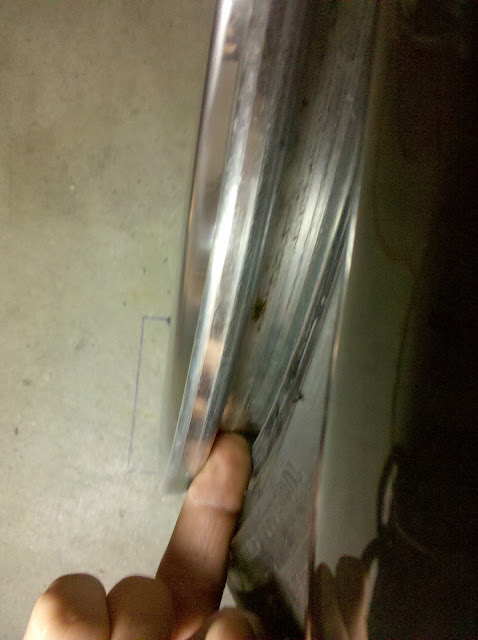
12PSI in this pic and i didn't notice till i got back from work and parked in the garage. Guess I actually rolled all the way home like that
PANCAKES!;331844 wrote:Yea, I got all that but doesn't it have to be 100% nitrogen for this all to work?
How do you keep air from forming inside?
And what are the cons for when your tire is low on nitrogen air and you feel it up w/ regular air?
Also what benefit is it for cars like ours??? If any?
-Yes, it should be as close to 100% N as possible
-Air wont get in if its all N
-Answered it up top ^^^
-Answered it up top ^^^
Air is all around us. Even in the tire before it seats bead. If your shop's gotta blast CA into the tire to seat bead like i do, then now ya got more air, then they'd just be toppin it off with N. Not too benefitial from that stand point.
Fourscan and Mowgli described two great ways to fill up with mostly N.
-- 2 Air valves. If ya pull out the valve stem in one, and fill N through the other, it'll eventually start pushin out most of the CA, leavin ya with a better amount of N inside.
-- Or fillin it with N, pullin off the velve stem and dumpin out the air inside. doin this over and over will slowly increase the amount of N inside, cause each time you let the air out, its pullin all the CA out with it too, eventually leavin ya with mostly N inside
Basically if its free, F it, it ain't no harm in gettin it. If I were payin for it, F them, it ain't benefitin me. Not for my situations anyways. And also from their methods in toppin off, if they'd do it right, then I'd wouldn't mind so much for like the wifey's ride or somethin :shrug:
View original BBCode
FYI I ain't no Nitrogen or Compressed Air expert, just goin off what i've learned and logic

[QUOTE=PANCAKES!;331819]So what I really want to know is, are there any warnings I should worry about now that I've filled my tire w/ normal air?[/QUOTE]
There's nothin wrong with fillin back up with Compressed Air. Just expect for them to be like everyone else's tires. They're aren't going to hold air longer, run cooler, or really have any benefits the N offers. You wouldn't have any of the benefits of N when toppin off with compressed air, cause now CA's the majority

[QUOTE=PANCAKES!;331819]And how does this nitrogen stuff work w/ our cars when we're riding low w/ so much camber?[/QUOTE]
With our amounts of camber, I dont think anythin can help us reduce premature tire wear except for a good alignment. Tires get hot from runnin on hot surfaces and drivin hard. There aren't too many of us tryin to race our cars. So for regular drivin, a tire get hot cause the amount of tread on the road and speeds. Faster you go, the hotter a tire can get. More tire in contact with the road, equals more friction, equals more heat. More heat will allow the tire to wear faster. N has a higher tolerance to heat, gonna keep the tire cooler, better for tire wear and fluctuatin pressures. Since we're ridin on corners, we probably make half as much heat. And most of the tire is in the air, air helps to cool things. So rollin with a gang of camber like we do, N doesn't seem to have much benefits over CA

[QUOTE=PANCAKES!;331819]Also I noticed that w/ that much camber, a flat tire, doesn't really look like a flat tire, I mean you can barely tell it's flat by looking at the bottom of the tire/wheel and noticing the flat part......[/QUOTE]

This man speaks the truth
:smiley-rofl: I found that one out the hard way too

VVVVV This is a fursure sign of a low tire that i too have seen VVVVV
[QUOTE=PANCAKES!;331819]Also noticed the lack of air, because the tire wall had shrunk to a full finger gap between the tire and rim instead of a half finger gap that I originally had. After I put air in the tire, the wall went back to where it was. I'll monitor it and see how it goes......[/QUOTE]
Here's the co-sign from me

12PSI in this pic and i didn't notice till i got back from work and parked in the garage. Guess I actually rolled all the way home like that
[IMG]http://lh4.ggpht.com/_yTr40MAMZU8/S6wFC6f4sCI/AAAAAAAAAoY/Lfkw6XOyYaM/s640/2010-03-25%2017.47.42.jpg[/IMG]

[QUOTE=PANCAKES!;331844]Yea, I got all that but doesn't it have to be 100% nitrogen for this all to work?
How do you keep air from forming inside?
And what are the cons for when your tire is low on nitrogen air and you feel it up w/ regular air?
Also what benefit is it for cars like ours??? If any?[/QUOTE]
-Yes, it should be as close to 100% N as possible
-Air wont get in if its all N
-Answered it up top ^^^
-Answered it up top ^^^

Air is all around us. Even in the tire before it seats bead. If your shop's gotta blast CA into the tire to seat bead like i do, then now ya got more air, then they'd just be toppin it off with N. Not too benefitial from that stand point.

Fourscan and Mowgli described two great ways to fill up with mostly N.
-- 2 Air valves. If ya pull out the valve stem in one, and fill N through the other, it'll eventually start pushin out most of the CA, leavin ya with a better amount of N inside.
-- Or fillin it with N, pullin off the velve stem and dumpin out the air inside. doin this over and over will slowly increase the amount of N inside, cause each time you let the air out, its pullin all the CA out with it too, eventually leavin ya with mostly N inside

Basically if its free, F it, it ain't no harm in gettin it. If I were payin for it, F them, it ain't benefitin me. Not for my situations anyways. And also from their methods in toppin off, if they'd do it right, then I'd wouldn't mind so much for like the wifey's ride or somethin :shrug:
Just to throw my 2 cents in ,
I used to have nitrogen in my tires back in 06 .
I love the stuff . After destroying my right rims at Lexfest in Atlanta back in 06 I had to get them fixed and the right side was filled with air instead.
The air side was 10-12 psi higher after driving on the highway for a few hours when compared to the nitrogen side as well as the air side being warmer than the other .
The strangest thing is the nitrogen side resonated road bumps much less.

The best thing about nitrogen is it being clean and dry to keep the tires lasting longer.
View original BBCode
Just to throw my 2 cents in ,
I used to have nitrogen in my tires back in 06 .
I love the stuff . After destroying my right rims at Lexfest in Atlanta back in 06 I had to get them fixed and the right side was filled with air instead.
The air side was 10-12 psi higher after driving on the highway for a few hours when compared to the nitrogen side as well as the air side being warmer than the other .
The strangest thing is the nitrogen side resonated road bumps much less.
The best thing about nitrogen is it being clean and dry to keep the tires lasting longer.
So I found out the hard way of way the tire had went flat.
This morning I got into my car to go to work, made it less than a foot when the beed of the tire popped.....cause, there was a nail deep in the tire which had cause the leak along time ago. It was so far in there that when I had checked weeks when the tire went flat, that I missed it.
:pat: & :shrug:


View original BBCode
So I found out the hard way of way the tire had went flat.
This morning I got into my car to go to work, made it less than a foot when the beed of the tire popped.....cause, there was a nail deep in the tire which had cause the leak along time ago. It was so far in there that when I had checked weeks when the tire went flat, that I missed it.
:pat: & :shrug:

[IMG]http://i179.photobucket.com/albums/w308/o2bbabe/2010-07-300628051.jpg[/IMG]

[IMG]http://i179.photobucket.com/albums/w308/o2bbabe/2010-07-30062720.jpg[/IMG]

[IMG]http://i179.photobucket.com/albums/w308/o2bbabe/2010-07-30062731.jpg[/IMG]
Was just going to ask about this Nitrogen thread. Overall sounds like a waste of time.
View original BBCode
Was just going to ask about this Nitrogen thread. Overall sounds like a waste of time.
Yea, but you can propose the argument that what if I had filled that tire back up w/ nitrogen rather than air....would the bead still have burst?
Cause isn't the theory that nitrogen is suppose to prevent that?
View original BBCode
Yea, but you can propose the argument that what if I had filled that tire back up w/ nitrogen rather than air....would the bead still have burst?
Cause isn't the theory that nitrogen is suppose to prevent that?
I am going to try this if I can find a place to do it.

Not sure why Junction Produce has not been offering us VIP nitrogen yet?
View original BBCode
I am going to try this if I can find a place to do it.
Not sure why Junction Produce has not been offering us VIP nitrogen yet?
Not being cheap but $2 a tire is a waste of money lol of you can look at it this way $2 for a green valve cap?
View original BBCode
Not being cheap but $2 a tire is a waste of money lol of you can look at it this way $2 for a green valve cap?
My car is green so I am looking forward to the green valve cap
View original BBCode
My car is green so I am looking forward to the green valve cap